(1843-1942)
| Original B&W Slides | Colorized | Other Scenes |
|---|---|---|
 |
 |
 |
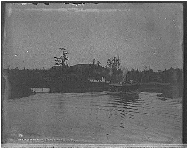
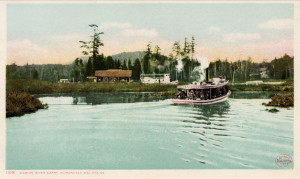
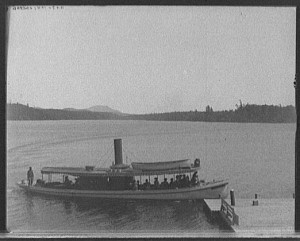
| 1902 Marion River Carry | Same photo with Phostint Steamer at Lower Carry | c1900 Casino at the Antlers Small steamer at dock |
 |
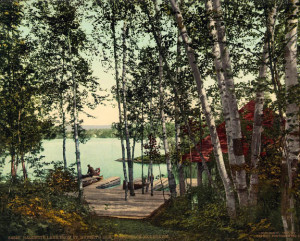 |
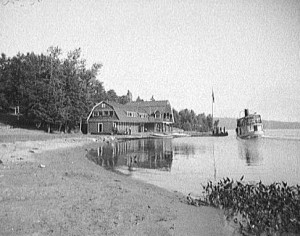 |
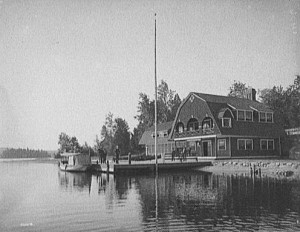
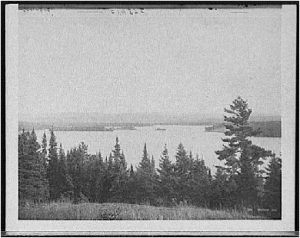
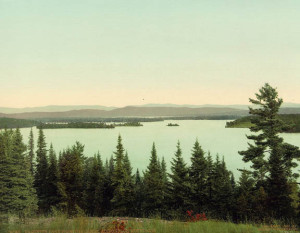
| 1902 A Glimpse of Raquette Lake from St. Hubert’s Isle | Same photo with Photochrom Dock & Boathouse at St. Hubert’s | c1905 Adirondack at the Antlers |
 |
 |
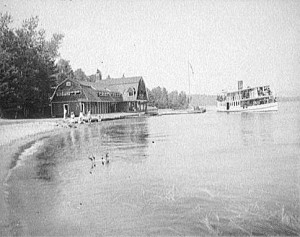 |
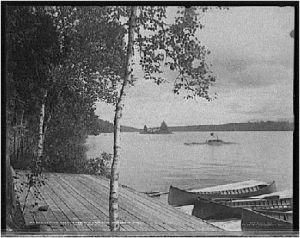
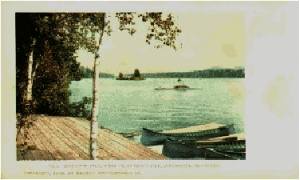
| 1902 Raquette Lake from the Crags | Same photo with Photochrom Osprey, St. Hubert’s & Strawberry Islands | c1905 Adirondack leaving Antlers |
 |
 |
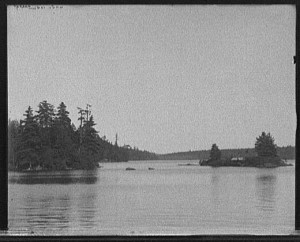 |
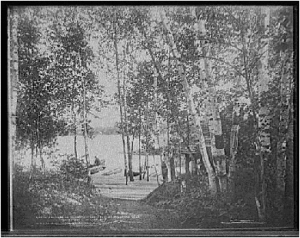
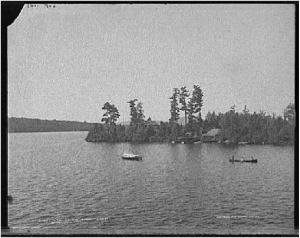
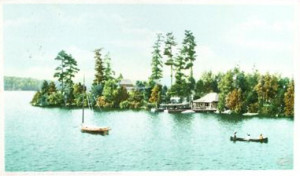
| 1902 Looking East from St Hubert’s | 1902 Looking East from St Hubert’s Wooden boardwalk to keep women’s long skirts out of the mud | c1900 Little Osprey & Wee Two Islands seen from St. Hubert’s |
 |
 |
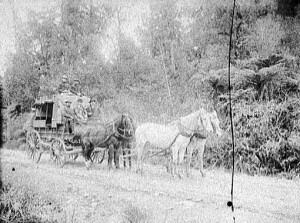 |
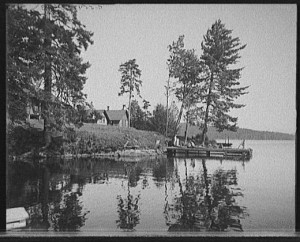
| 1902 Camp La Rue [Ladew] | 1902 Camp La Rue [Ladew] from the veranda at St. Hubert’s | c1900 Adirondack Stagecoach |
 |
 |
 |
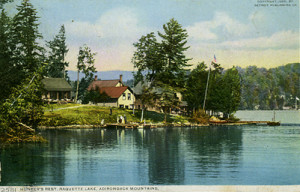
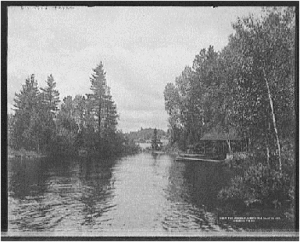
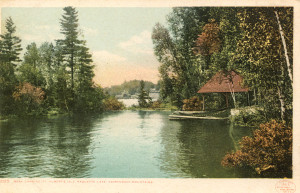
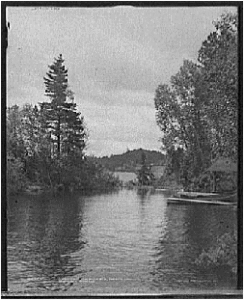
| c1905 Landing at Hunters’ Rest | 1920 Phostint postcard Hunters’ Rest | 1902 Killoquah at the Antlers |
 |
 |
 |
| 1907 Boat Landing at St Hubert’s | 1907 Phostint of same Boat slips with guideboats just as we found it in 1958 | 1902 The Antlers from St Hubert’s |
 |
 |
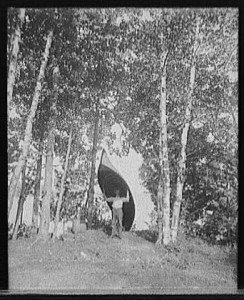 |
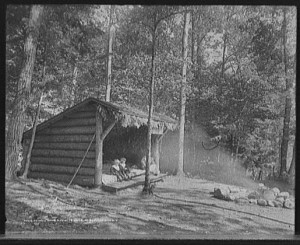
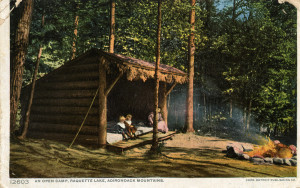
| 1909 Open Camp on Raquette Lake | Colorized postcard dated 1910 Similar lean-tos seen at Pine Knot, Sunset Camp and the Antlers | 1902 An Adirondack Carry |
 |
 |
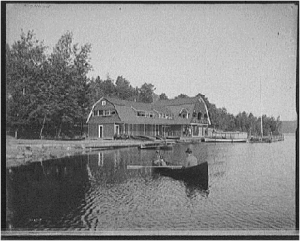 |
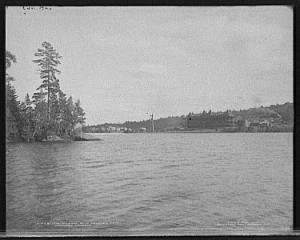
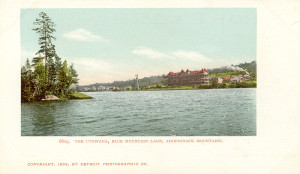
| 1902 The Utowana Blue Mountain Lake | 1902 colorized postcard The Utowana Frederic Durant’s grand hotel Prospect House | 1902 Guideboat leaving the Antlers |
All the gray scale photos seen above are from glass slides in the Library of Congress collection. After Jackson became head of the Detroit Publishing Company in 1898, thousands of these images were colorized and published as postcards, a popular method of communication at the turn of the century.
At the turn of the last century telephones were still not common in every household. There were two, sometimes three mail deliveries a day – as there still were in downtown Baltimore as late as the 1970s. In 1912 an invitation for dinner mailed at 11 am in Hudson would be delivered by 4 pm in Port Charles.
WILLIAM HENRY JACKSON, “America’s greatest landscape photographer,” was born in Keeseville, NY. He spent most of his life behind the camera, first on his own and later in the 1870s finding a more permanent income working for major railroads to persuade travellers to journey by rail to see the wondrous sights of the US and abroad.
Many of the photos seen above were commissioned by the Delaware & Hudson Railway and the New York Central Railroad, to increase ridership.
In 1897 Jackson was recruited to become president of the Detroit Publishing Company that specialized in the rapidly growing market for picture postcards. He brought along thousands of glass slides, some of which can be viewed above.
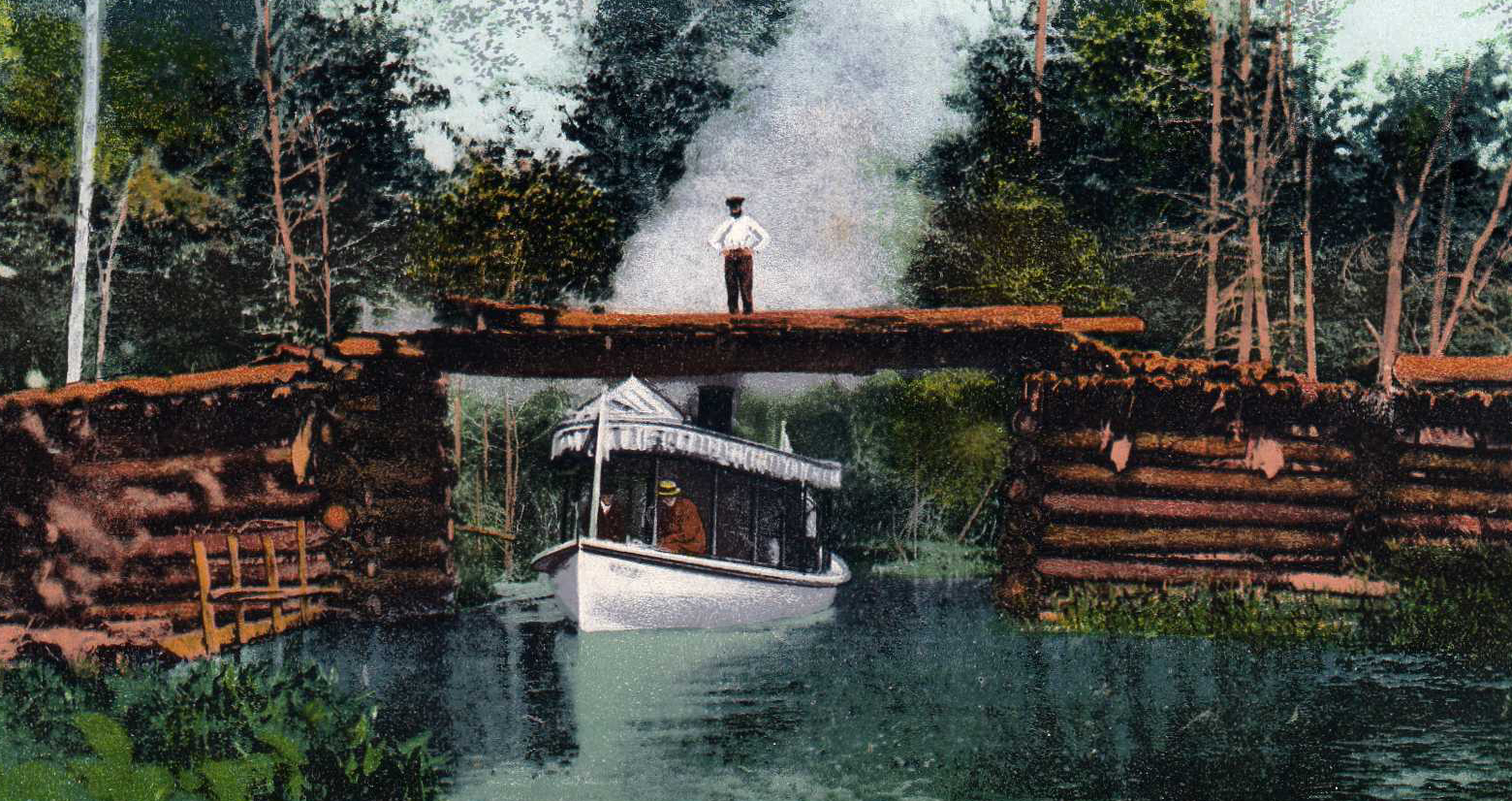
The Detroit Publishing Company owned the patent for the “Photochrom” process, first developed in Switzerland. It used several treatments of crushed stones to color the black and white negatives, two of which can be seen above. According to some accounts, this was a major factor in Jackson’s decision to lead the company.
~~~~~~~
Library of Congress, Prints and Photographs Division, Detroit Publishing Company Collection
Jackson, William Henry. 1902-1920. Touring Turn-of-the-Century America.
In Detroit Publishing Company Collection from the Library of Congress, 1880-1920.
[Online] Available HTTP: http://memory.loc.gov/ammem/detroit/dethome.html. [August 15, 1999]
Return to Adirondack Photographers | Jackson Bio | Jackson Timeline